
Problem
Corrupt UDP packets.
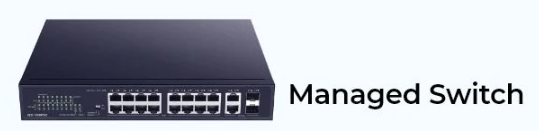
Scenario: With SubC Rayfin cameras connected through a managed network switch to the SubC DVR+O PC, the managed switch appeared to be fragmenting packets (in a way similar to how the ADSL modems behave in Seamux unit) which was causing corrupted packets to be sent to the DVR+O.
Solution
Enabled “jumbo packets” in the managed switch settings. This abates the UDP corruption issue.
To enable jumbo packets on your managed switch, please refer to your switches manufacturers manual.
Alternatively, switching to TCP mode, if possible, is recommended (in both ADSL/Seamux and Managed Network Switch cases) thereby eliminating UDP corruption issue.
Tech Terms
UDP Corruption
UDP corruption refers to situations where data inside a UDP (User Datagram Protocol) packet becomes altered or damaged during transmission. Because UDP is a lightweight, connectionless protocol, it does not guarantee data integrity beyond a simple checksum, and even that checksum is optional in some implementations.
-
UDP does not:
-
Retransmit lost or corrupted packets
-
Guarantee packet order
-
Confirm delivery
-
Provide built‑in error correction
-
-
UDP is a “send and forget” protocol. If reliability is needed, the application must implement its own checks, retries, or validation.
-
Use TCP instead if reliability is more important than speed
UDP “Jumbo Packets”
UDP jumbo packets are essentially very large UDP datagrams, larger than the traditional Ethernet MTU of 1500 bytes. They’re not a formal protocol feature of UDP itself; instead, they rely on the underlying network stack and hardware to support jumbo frames.
Here’s a clear breakdown so you can see what’s really going on.
What “UDP Jumbo Packets” Actually Mean
UDP has no built‑in size limit (other than 65,535 bytes). A UDP datagram can theoretically be up to 65,535 bytes, because:
-
UDP header = 8 bytes
-
IP header = typically 20 bytes
-
Remaining ~65 KB for payload
But that doesn’t mean the network can carry it in one piece.
Limiting Factor: MTU - Most networks use:
-
1500‑byte MTU on standard Ethernet
-
9000‑byte MTU on jumbo‑frame‑enabled networks
If a UDP datagram is larger than the MTU, IP fragmentation occurs—unless disabled.
Fragmentation results in:
-
Higher packet loss probability
-
If one fragment is lost, the entire datagram is lost
-
More CPU overhead
-
Harder to troubleshoot
“UDP jumbo packets” are used to send large UDP datagrams without fragmentation, which requires jumbo frames.
To send a large UDP datagram without fragmentation, you need:
-
Jumbo frames enabled on:
-
Sender NIC
-
Switches
-
Routers
-
Receiver NIC
-
-
Consistent MTU across the entire path
If any hop does not support jumbo frames, packets get dropped or fragmented.
ADSL Modem
An ADSL modem delivers internet access by splitting ordinary copper telephone line into two channels: Voice - the regular telephone signal and Data - higher‑frequency signals carrying internet traffic. A DSL filter keeps the two from interfering with each other. ADSL stands for Asymmetric Digital Subscriber Line - “asymmetric” meaning Download speeds are higher and Upload speeds are lower.
-
Seamux™ is a solid-towed marine seismic streamer used in geophysical surveys. It’s a long cable with hydrophones used to collect subsurface seismic data for research or exploration.
Seamux
Seamux™ is a solid-towed marine seismic streamer used in geophysical surveys. It’s a long cable with hydrophones used to collect subsurface seismic data for research or exploration.